

Okra vs Pumpkin: Nutrition & Calories Compare

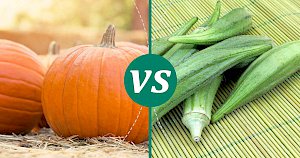
Okra vs Pumpkin
Nutrition Facts
Serving size:
change
5g10g15g20g30g40g50g60g80g100g120g140g160g180g200g220g250g300g350g400g450g500g600g700g800g900g1000g
1oz2oz3oz4oz5oz6oz7oz8oz10oz12oz15oz20oz25oz30oz35oz40oz50oz
Amount Per Serving:
Serving size:
change
5g10g15g20g30g40g50g60g80g100g120g140g160g180g200g220g250g300g350g400g450g500g600g700g800g900g1000g
1oz2oz3oz4oz5oz6oz7oz8oz10oz12oz15oz20oz25oz30oz35oz40oz50oz
Amount Per Serving:
Okra vs Pumpkin 100g Compare
| per 100g | Okra | Pumpkin |
|---|---|---|
| Calories | 33 | 26 |
| Carbohydrates | 7.5 g | 6.5 g |
| Fat | 0.1 g | 0.1 g |
| Dietary fiber | 3.8 g | 0.5 g |
| Protein | 2 g | 1 g |
| Calcium | 81 mg | 21 mg |
| Iron | 0.8 mg | 0.8 mg |
| Magnessium | 57 mg | 12 mg |
| Phosphorus | 63 mg | 44 mg |
| Potassium | 303 mg | 340 mg |
| Sodium | 8 mg | 1 mg |
| Zink | 0.6 mg | 0.32 mg |
| Vitaminium A | 375 µg | 7384 µg |
| Vitaminium B1 (Thiamine) | 0.2 mg | 0.05 mg |
| Vitaminium B2 (riboflavin) | 0.06 mg | 0.11 mg |
| Vitaminium B3 (Niacin) | 1 mg | 0.6 mg |
| Vitaminium B5 | 0.245 mg | 0.298 mg |
| Vitaminium B6 | 0.215 mg | 0.061 mg |
| Vitaminium B9 (Folic acid) | 88 mg | 16 mg |
| Vitaminium C | 21.1 mg | 9 mg |
| Vitaminium E | 0.36 mg | 1.06 mg |
| Vitaminium K | 53 µg | 1.1 µg |
| Beta karoten | 225 mg | 3100 mg |

Exploring the Nutritional Profiles of Okra and Pumpkin
Both okra and pumpkin are celebrated for their unique flavors and textures in cuisines around the world. Beyond their culinary versatility, these vegetables are packed with a plethora of health benefits that make them staples in a balanced diet. Before diving into the nutritional comparison, let’s uncover some interesting facts about these two plants.
A Closer Look at Okra
Okra, often referred to as “ladies' fingers,” is a warm-season vegetable known for its edible green pods. Rich in vitamins, minerals, and fiber, okra is not only a favorite in Southern American cuisine but is also widely used in African, Middle Eastern, and Indian dishes. Its unique mucilaginous texture makes it an excellent thickening agent for soups and stews.
The Versatile Pumpkin
Pumpkin, a symbol of fall, is much more than a Halloween decoration. This nutritious squash is low in calories but rich in vitamins, particularly vitamin A, which supports eye health. Pumpkins are incredibly versatile in the kitchen, lending themselves to both sweet and savory dishes. From pies and soups to roasted seeds and even coffees, the culinary uses of pumpkin are endless.
Comparing Nutrition: Okra vs. Pumpkin
When it comes to nutrition, both okra and pumpkin offer impressive profiles that can contribute to a healthy diet. Here's a breakdown of their nutritional content per 100 grams:
- Calories: Okra contains 33 calories, while pumpkin is slightly lower at 26 calories.
- Carbohydrates: Okra has 7.5 grams, and pumpkin comes in close with 6.5 grams.
- Fiber: Okra is a fiber powerhouse with 3.8 grams, compared to pumpkin's modest 0.5 grams.
- Protein: Okra offers 2 grams of protein, with pumpkin providing 1 gram.
- Vitamins and Minerals: Okra is rich in calcium, magnesium, and vitamins C and K, whereas pumpkin shines with its high vitamin A content and potassium levels.
Both vegetables are virtually fat-free and have no cholesterol, making them excellent choices for heart-healthy diets. Furthermore, the high fiber content in okra is beneficial for digestive health, while the beta-carotene (pro-vitamin A) in pumpkin is crucial for skin and vision health.
Conclusion: Which Is Healthier?
Choosing between okra and pumpkin ultimately depends on your nutritional needs and culinary preferences. If you're looking for a low-calorie option rich in fiber and vitamins C and K, okra is a fantastic choice. On the other hand, if you prioritize vitamin A and potassium intake, pumpkin will be your go-to vegetable.
Regardless of your choice, incorporating a variety of vegetables like okra and pumpkin into your diet can contribute to overall health and well-being. So, why not enjoy both and reap the diverse benefits they offer?
Okra 100g
33kcalCalories source
- 77% CARBS.
- 21% PROTEIN
- 2% FAT
Pumpkin 100g
26kcalCalories source
- 84% CARBS
- 13% PROTEIN
- 3% FAT
Compares of okra
- Okra vs Asparagus
- Okra vs Beetroot
- Okra vs Bitter Melon
- Okra vs Bok Choy
- Okra vs Broccoli
- Okra vs Brussels Sprouts
- see all compares of okra
Marcin Piotrowicz
calories-info.com creator
Healthy diet and healthy lifestyle promoter
Add comment