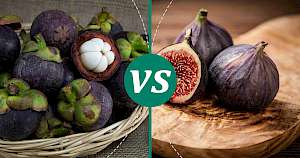
Figs vs Mangosteen: Nutrition & Calories Compare


Figs - calories, kcal, weight, nutrition

Fig vs Mangosteen
Nutrition Facts

Fig
Serving size:
  change
one fig (70g)handful (210g)cup, chopped (150g)
5g10g15g20g30g40g50g60g80g100g120g140g160g180g200g220g250g300g350g400g450g500g600g700g800g900g1000g
1oz2oz3oz4oz5oz6oz7oz8oz10oz12oz15oz20oz25oz30oz35oz40oz50oz

Amount Per Serving:
Calories

% Daily Value

Total Fat g
0%

Saturated Fat g
0%

Cholesterol mg
0%

Sodium mg
0%

Total Carbohydrates g
0%

Dietary Fiber g
0%

Sugars g

Protein g
0%

Vitaminium C mg
0%

Calcium mg
0%

Iron mg
0%

Potassium mg
0%

Glycemic Index: 35

* The % Daily Value (DV) shows how much a nutrient in one serving of food contributes to your total daily diet. A 2000-calorie daily intake is used as a general guideline for nutrition advice.
Mangosteen
Serving size:
  change
one mangosteen (120g)cup (168g)half cup (84g)
5g10g15g20g30g40g50g60g80g100g120g140g160g180g200g220g250g300g350g400g450g500g600g700g800g900g1000g
1oz2oz3oz4oz5oz6oz7oz8oz10oz12oz15oz20oz25oz30oz35oz40oz50oz

Amount Per Serving:
Calories

% Daily Value

Total Fat g
0%

Cholesterol mg
0%

Sodium mg
0%

Total Carbohydrates g
0%

Dietary Fiber g
0%

Protein g
0%

Vitaminium C mg
0%

Calcium mg
0%

Iron mg
0%

Potassium mg
0%

Glycemic Index: 25

* The % Daily Value (DV) shows how much a nutrient in one serving of food contributes to your total daily diet. A 2000-calorie daily intake is used as a general guideline for nutrition advice.

Fig vs Mangosteen 100g Compare


per 100gFigsMangosteen
Calories74 73
Carbohydrates19.18 g17.91 g
Fat0.3 g0.58 g
Dietary fiber2.9 g1.8 g
Protein0.75 g0.41 g
Calcium35 mg12 mg
Iron0.37 mg0.3 mg
Magnessium17 mg13 mg
Potassium232 mg48 mg
Sodium1 mg7 mg
Vitaminium A142 µg35 µg
Vitaminium B1 (Thiamine)0.06 mg0.054 mg
Vitaminium B2 (riboflavin)0.05 mg0.054 mg
Vitaminium B3 (Niacin)0.4 mg0.286 mg
Vitaminium B50.3 mg0.032 mg
Vitaminium B60.113 mg0.041 mg
Vitaminium B9 (Folic acid)0.006 mg31 mg
Vitaminium C2 mg2.9 mg

Discovering the Nutritional Jewels: Figs and Mangosteen

Figs and mangosteen, two fruits rich in history and flavor, offer more than just a sweet treat. These fruits, originating from different corners of the world, have intrigued people not only with their unique tastes but also with their nutritional profiles. Let’s delve into the world of figs and mangosteen, uncovering the fascinating facts that make them stand out in the fruit kingdom.

Unveiling the Mystique of Figs

Figs, with their ancient roots tracing back to the Mediterranean and Middle East, have been a symbol of peace and prosperity throughout the ages. This fruit, often associated with mythical legends, is not only steeped in history but also packed with nutrients. Figs are a powerhouse of fiber, vitamins, and minerals, making them a valuable addition to any diet.

The Exotic Appeal of Mangosteen

Mangosteen, often referred to as the "queen of fruits," hails from the tropical rainforests of Southeast Asia. Its royal title is attributed to its uniquely sweet and tangy flavor profile, encased in a deep purple rind. Beyond its luxurious taste, mangosteen is renowned for its array of health benefits, thanks to its rich composition of vitamins, minerals, and antioxidants.

Nutritional Face-Off: Figs vs. Mangosteen

When comparing figs and mangosteen, it's clear that both fruits bring their own set of nutritional benefits to the table. Here’s a closer look at how these fruits compare nutritionally:

  • Calories: Figs and mangosteen are almost neck and neck, with figs containing 74 calories per 100 grams and mangosteen slightly less at 73 calories.
  • Carbohydrates and Fiber: Figs lead with 19.18 grams of carbohydrates and 2.9 grams of fiber, while mangosteen follows closely with 17.91 grams of carbohydrates and 1.8 grams of fiber.
  • Fats and Protein: Both fruits are low in fat, but mangosteen has a slightly higher content (0.58 grams) compared to figs (0.3 grams). Figs, however, offer more protein with 0.75 grams compared to mangosteen’s 0.41 grams.
  • Vitamins and Minerals: Figs are an excellent source of calcium and potassium, significantly outpacing mangosteen in these areas. However, mangosteen contains a higher amount of vitamin C and zinc, contributing to its antioxidant properties.

Both fruits are gluten-free and cholesterol-free, making them a healthy choice for those with dietary restrictions.

Which Fruit Wins the Nutritional Crown?

Choosing between figs and mangosteen ultimately depends on your nutritional needs and taste preferences. If you’re seeking fiber and potassium, figs might be your best bet. On the other hand, for those looking for antioxidants and a unique taste experience, mangosteen could be the way to go.

Regardless of your choice, incorporating these fruits into your diet can add a burst of flavor and a wealth of health benefits. Whether enjoyed fresh, dried, or as part of a delicious recipe, figs and mangosteen are sure to enrich your culinary adventures with their distinctive tastes and nutritional profiles.

In conclusion, the comparison between figs and mangosteen reveals that both fruits offer unique benefits, making them both worthy of inclusion in a balanced diet. By understanding their nutritional differences, you can make an informed choice that aligns with your health goals and palate preferences. So, why not enjoy the best of both worlds and savor the rich flavors and nutrients these fruits have to offer?

Figs 100g

74kcal

Calories source

  • 93% CARBS.
  • 4% PROTEIN
  • 3% FAT

Mangosteen 100g

73kcal

Calories source

  • 91% CARBS
  • 2% PROTEIN
  • 7% FAT
Marcin Piotrowicz
Author of this page
Marcin Piotrowicz

calories-info.com creator
Healthy diet and healthy lifestyle promoter

All information about nutrition on this website was created with help of information from the official United States Department of Agriculture database.

Add comment